Categories
Recent Post
Stainless Steel Nut
24
Mar 2026
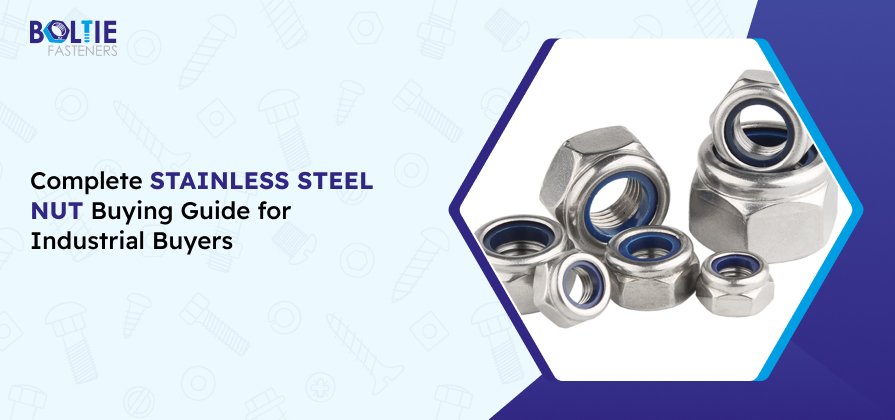
Complete Stainless Steel Nut Buying Guide for Industrial Buyers
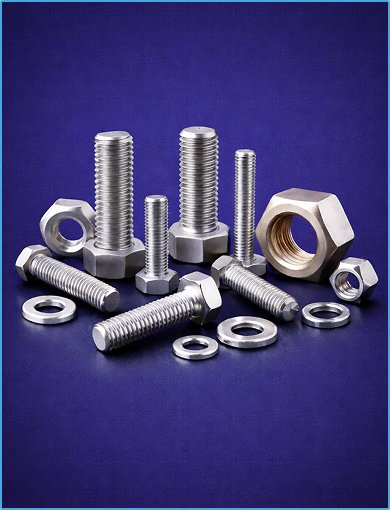
When you are managing a large-scale industrial project, every single component matters. The one thing that is very important but that we always miss to notice in these projects is the stainless steel nut.
These are the things that keep a system bound together, whether it’s machinery, bridges or infrastructure. The selection of an appropriate nut fastener is not only about the assembly, but it is also about safety, efficiency and longevity of your entire operation.
If you are looking for a fastener supplier for your next project, this guide will assist you in navigating the complexities of grades, materials and suppliers to ensure you make the right choice.
Understanding the Primary Functions and Mechanisms of Industrial Nuts
An industrial stainless steel nut is a fastener designed to create a secure, mechanical bond when attached with a matching bolt. This mechanical connection relies on the internal threading of the stainless steel nut that must mirror the external threading of the bolt.
When a stainless steel nut is tightened over the threading of a bolt, it creates a high frictional force that converts rotational movement into axial tension. This tension keeps two or more components connected tightly, even during extreme conditions.
In Industrial environments, these nuts function as a locking mechanism that prevents loosening caused by continuous vibrations and temperature changes, thereby maintaining structural integrity over time.
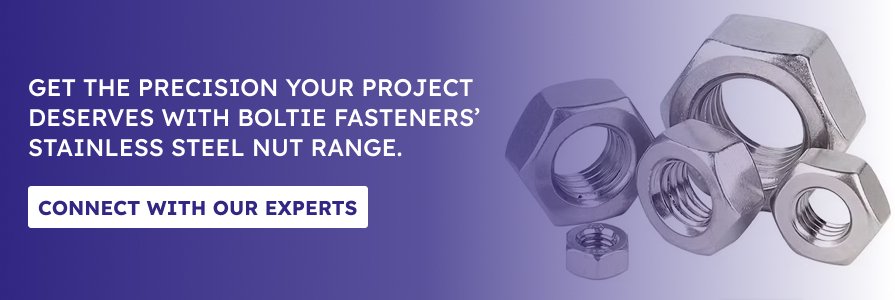
How to Choose the Right Stainless Steel Nut
When choosing a stainless steel nut supplier, you should keep these things in mind:
Determine Strength and Load Capacity
Always check the mechanical properties. The industrial-grade nut should be able to handle the load of the bolt it is paired with. So, you need to match the grade with your machinery’s specific stress requirements.
Correct Sizing and Thread Pitch
Nothing is more frustrating than a fastener that doesn’t fit. Double-check your requirements to determine the size of your stainless steel nut: Metric (M-series) or Imperial (inches). The thread pitch (fine vs. coarse) should also match your requirements perfectly to prevent stripping.
Analyse the Application Environment
Environmental factors cannot be ignored while choosing stainless steel nuts. You need to answer several questions for yourself, like:
- Is my industry located near the ocean?
- Is it for the dry, indoor use or outdoor use where there is a lot of moisture?
- Will the nut be submerged in chemicals? If yes, then what type of chemicals?
Surface Finish and Coating
A stainless steel nut is naturally durable. However, an extra layer of protection can be added to it to strengthen its defence against staining and environmental oxidation.
How to Select a Reliable Stainless Steel Nut Manufacturer & Supplier
Choosing the right partner is just as important as the product itself. When searching for a nut bolt manufacturer, keep these things in mind:
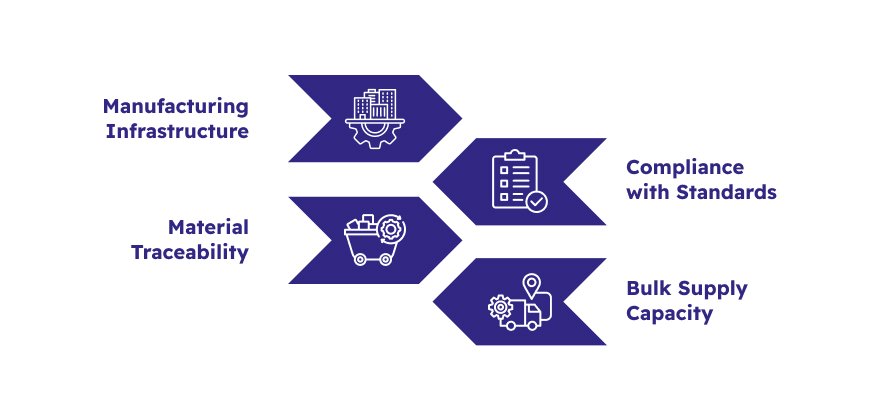
Manufacturing Infrastructure
A leading nuts manufacturer uses advanced, automatic machinery. This ensures that every single nut is produced with consistency, precision and uniform thread design.
Material Traceability
Always ask your ss nut manufacturer if they provide Mill Test Reports (MTRs). These reports serve as your proof that you have obtained the top-quality material.
Compliance with Standards
Your stainless steel nut supplier should follow international benchmarks like ISO, DIN, or ASTM. This process guarantees that your components will match international bolt standards and meet all safety regulations.
Bulk Supply Capacity
You should confirm that your supplier has the capacity to handle your required production quantities. A reliable partner must possess the ability to increase production capacity without reducing the quality, in case you need a bulk order delivered quickly to meet your project deadline.
Applications of Stainless Steel Nuts in Modern Industry
The exceptional durability, together with their resistance to wear, makes stainless steel nuts essential components for all major industrial sectors. Unlike standard fasteners that can be damaged under pressure or corrode, stainless steel nuts deliver permanent and reliable performance.
Here are the primary applications where they are most commonly used:
Construction and Infrastructure
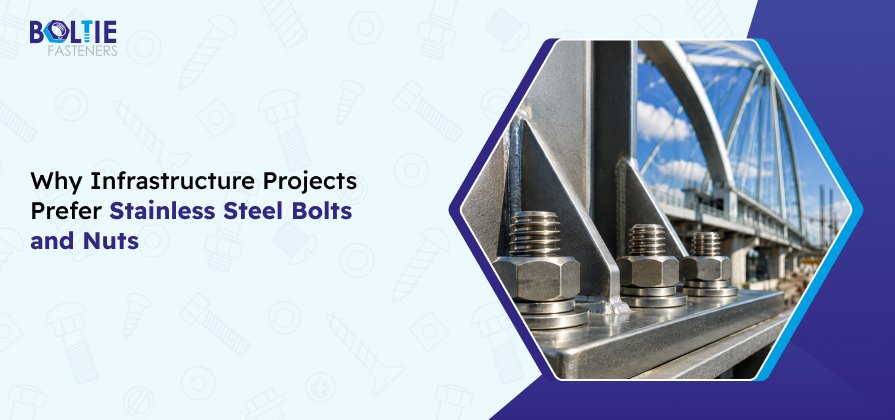
In the construction of buildings, bridges and large-scale metal structures, Stainless steel nuts are used because of their ability to withstand the heavy weight of materials and resist outdoor weather.
Marine and Offshore Environments
Shipbuilding, oil rigs and coastal infrastructure work require stainless steel nuts because the material does not rust and maintains its strength even when exposed to salt water.
Automotive and Transportation
Automobile manufacturers use stainless steel nuts to ensure that their critical components remain securely fastened through all vibrations and temperature fluctuations. This improves the overall safety and lifespan of the vehicle.
Chemical and Transportation
Stainless steel nuts do not react with most of the chemicals, which makes them a perfect choice for securing storage tanks, pipelines and processing equipment in chemical plants.
Food and Beverage Processing
Because stainless steel resists corrosion from cleaning agents and is non-porous, stainless steel nuts are used in almost all food processing machinery. It ensures that no contaminants or rust ever enter the production line and keeps the consumer products safe.
Why Choose Boltie Fasteners PVT LTD as Your Nut Supplier
Boltie Fasteners PVT LTD is known to offer the highest quality of fasteners in the market. Our company has become an industry leader through our commitment to delivering the best stainless steel nut.
Our commitment to precise engineering work has existed for more than a decade. Our advanced facility employs automated, high-speed machinery to guarantee that all our products will meet international quality standards ISO 9001:2015. With stainless steel nut, we at Boltie Fasteners PVT LTD deliver durable solutions to customers in the construction, automotive, marine and chemical sectors.
By partnering with us, you get more than just a metal part. You get a commitment to excellence, competitive pricing and on-time delivery, which ensures that your work proceeds on schedule.
Types of Nuts Manufactured by Boltie Fasteners PVT LTD
- Hex Nut (DIN 934) – Metric sizes M4 to M16; Inch 3/16″ TO 5/8″
- Hex Lock NUT (DIN 439) – Metric M6 to M16; inch 1/4″ to 5/8″
- Square NUT (DIN 557) – Metric M4 to M12
- Hex Weld NUT – Metric M6 to M10
- HEX FLANGE NUT (DIN 6923) – Metric M6 to M10
Conclusion
The selection process for stainless steel nut requires careful selection because it affects both safety and project durability in industrial work. Your assemblies will maintain their security for extended periods when you understand the different grades of materials and your specific work environment. In addition, you can also improve the chances of your project’s success when you choose Boltie Fasteners PVT LTD as your trustworthy supplier.
FAQs Related to Stainless Steel Nut:
Q. What are stainless steel nuts used for?
Ans: Stainless steel nuts are used to fasten bolts and screws in applications where corrosion resistance, strength, and durability are required. They are widely used in construction, automotive, marine, food processing, and industrial machinery.
Q. Which grade is better: SS304 or SS316 for nuts?
Ans: SS304 (A2) is ideal for general applications with good corrosion resistance, while SS316 (A4) is better for marine, chemical, and high-moisture environments due to its superior resistance to rust and chemicals. Choose SS316 when durability in harsh conditions is critical.
Q. What sizes of stainless steel nuts are available?
Ans: Stainless steel nuts are available in a wide range of sizes, typically from M3 to M24 in metric and 1/4″ to 5/8″ in inch sizes, depending on the type such as hex nuts, lock nuts, and flange nuts. Custom sizes may also be available on request.
Q. What are the different types of stainless steel nuts?
Ans: Common types include:
- Hex Nut (DIN 934)
- Hex Lock Nut (DIN 439)
- Square Nut (DIN 557)
- Hex Flange Nut (DIN 6923)
- Hex Weld Nut
Each type is designed for specific applications like vibration resistance, welding, or load distribution.
Q. How do I choose the right stainless steel nut?
Ans: To choose the right nut, consider:
- Load strength requirements
- Environment (corrosive, marine, etc.)
- Thread size and pitch compatibility
- Type of application (vibration, welding, structural)
For example, use lock nuts in high-vibration environments and flange nuts where load distribution is needed.