Categories
Recent Post
Stainless Steel Bolts
27
Aug 2026
Why Stainless Steel Fasteners Are Used in Transformers
Stainless Steel Fasteners are used in transformers for one simple reason: transformers cannot afford to fail quietly. A loose or rusted bolt can cause oil leaks or a full breakdown, and outdoor transformers face rain, heat, and vibration that ordinary bolts cannot survive.
Stainless steel handles this without corroding or disturbing the magnetic function. This article covers why stainless steel fasteners matter, where they are used, which grades work best, and how to choose them.
Key Reasons Stainless Steel Fasteners Are Essential for Transformers
Transformers are not simple boxes. They are precision electrical machines that need to stay leak-proof, corrosion-free, and magnetically balanced for decades. Here is why Stainless steel bolts & nuts are the standard choice for this job.
How do SS fasteners prevent corrosion in transformer oil and weather?
Transformers are filled with insulating oil and are almost always installed outdoors, exposed to rain, humidity, and temperature swings. Regular carbon steel bolts rust quickly in this environment, and rust particles inside transformer oil can reduce its insulating quality, which is a serious safety risk.
Stainless steel fasteners contain chromium, which forms a thin, self-repairing oxide layer on the surface. This layer stops moisture and oxygen from reaching the metal underneath, so the fastener does not rust even after years of contact with oil, humid air, or coastal weather.
This is precisely why stainless steel bolts for transformers are specified in almost every modern transformer design, whether the unit sits in a factory yard, a substation, or near the coast.
Also Read on: Why Infrastructure Projects Prefer Stainless Steel Bolts and Nuts
Why non-magnetic SS fasteners are required in electromagnetic fields
A transformer works by generating a strong magnetic field. If the fasteners used inside the unit are magnetic, they can heat up on their own due to eddy currents, disturb the magnetic flux, and reduce the transformer’s efficiency over time.
This is why certain grades of stainless steel, which are largely non-magnetic or only weakly magnetic, are preferred for core and coil assembly points. Using the wrong fastener here is not just a durability issue. It directly affects how well the transformer performs.
Can Stainless Steel Fasteners withstand extreme heat and vibration?
Transformers run hot, and they vibrate constantly due to the electrical current moving through the windings. Fasteners near the core, tank, or cooling fins face this heat and vibration every single day for the transformer’s entire service life, which can run into decades.
Stainless steel keeps its strength at high temperatures far better than plain steel, and it resists loosening under continuous vibration when installed with the correct torque. This combination of heat resistance and vibration resistance is a major reason engineers do not compromise on fastener quality for this application.
How Fasteners Function Inside a Transformer
To understand why stainless steel fasteners matter so much, it helps to picture where they actually sit inside the machine.
Stainless steel bolts securing transformer cores and coils
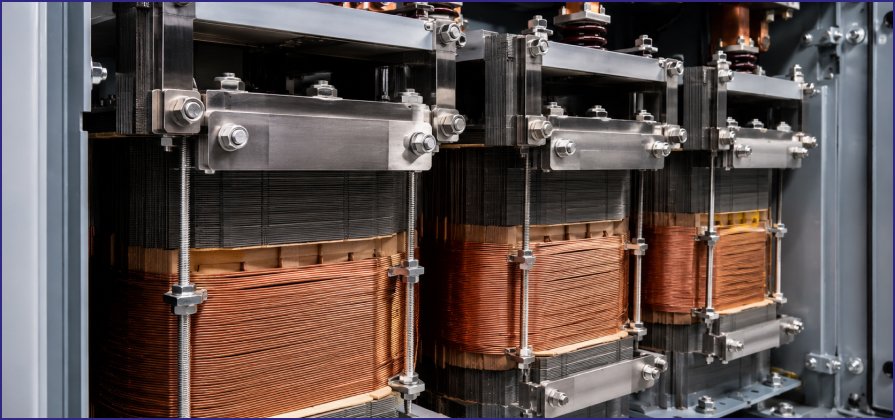
Inside the core and coil assembly, fasteners hold together thin steel laminations and copper or aluminium windings. These joints must stay tight without disturbing the magnetic field, which is why non-magnetic stainless steel bolts and studs are used at these critical points. Any looseness here can cause vibration, noise, and eventual damage to the winding insulation.
SS fasteners for external tanks, radiators, and bushings
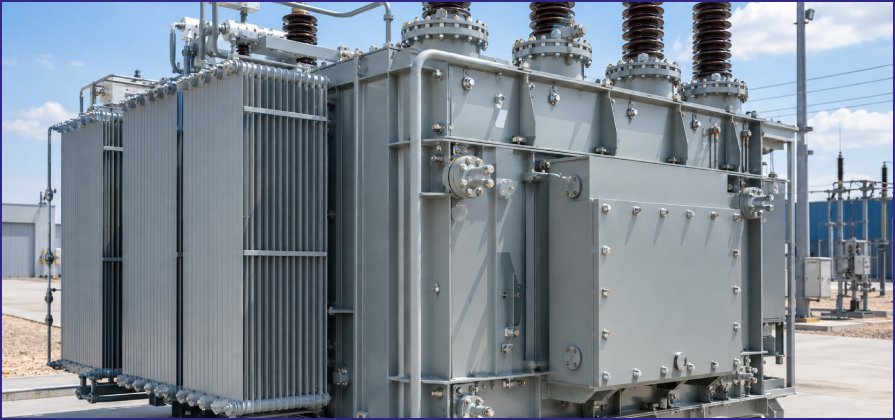
On the outside of the transformer, fasteners secure the main tank, cooling radiators, conservator, and bushings. These parts are directly exposed to weather, oil seepage, and pressure changes, so leak-proof, corrosion-resistant hardware is non-negotiable here.
This is one of the biggest reasons industrial fasteners made from stainless steel are used across the entire transformer body, not just the core.
Grounding connections and terminals using stainless hardware
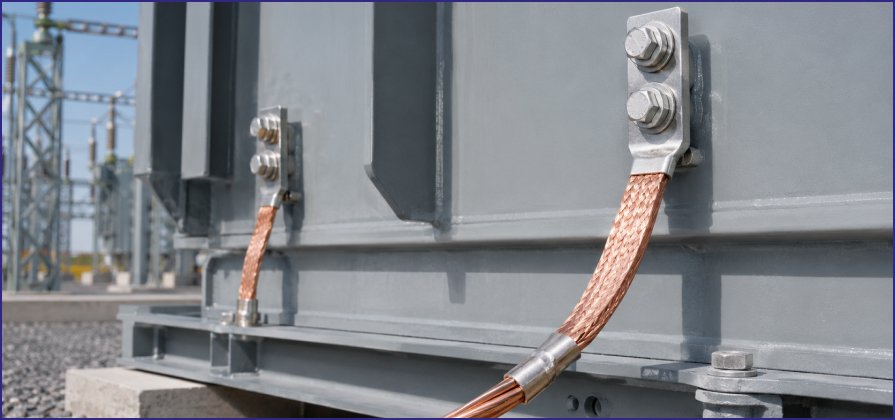
Grounding hardware and terminal connections carry fault currents and must maintain a solid, low-resistance contact at all times. A corroded grounding bolt can create a safety hazard during a fault, so stainless steel is used here to guarantee a reliable connection year after year, regardless of weather exposure.
Read on which industries uses ss fasteners, Explore: 10 Industries That Rely on Stainless Steel Fasteners Every Day
Which Grades of SS Fasteners Are Best for Transformers?
Not every stainless steel grade performs the same way, so choosing the right one matters as much as choosing stainless steel itself.
Grade 304 SS Fasteners for standard indoor and outdoor units
Grade 304 is the most commonly used stainless steel grade for general transformer applications. It offers strong corrosion resistance, good mechanical strength, and works well for both indoor substations and standard outdoor installations that are not in heavily industrial or coastal zones.
Grade 316 SS Fasteners for marine and highly corrosive settings
Grade 316 contains added molybdenum, which gives it much stronger resistance to chlorides and industrial pollutants. This makes it the preferred choice for transformers installed near the coast, in chemical plants, or in areas with heavy pollution, where Grade 304 alone may not last as long.
Grade 304 vs Grade 316: Quick comparison for transformer use
| Factor | Grade 304 | Grade 316 |
| Best suited for | Standard indoor/outdoor units | Marine, coastal, and industrial zones |
| Corrosion resistance | Strong | Superior (added molybdenum) |
| Chloride/chemical exposure | Moderate resistance | High resistance |
| Typical environment | Inland substations, factory yards | Coastal sites, chemical plants |
| Cost | Lower | Higher |
How to Select the Right Stainless Steel Fasteners for Your Transformer
Picking the right fastener is not guesswork. It follows a clear, repeatable process.
Step 1: Evaluate operating environment and weather exposure
Start by identifying where the transformer will sit, like coastal, industrial, humid, or standard inland conditions, since this decides whether Grade 304 or Grade 316 is the better fit.
Step 2: Verify magnetic permeability limits
For fasteners near the core and windings, confirm the magnetic permeability rating meets the transformer manufacturer’s specification, so the fastener does not interfere with the magnetic circuit.
Step 3: Check torque specs and load capacity
Match the fastener’s size, thread, and grade to the torque and load requirements of that specific joint, since under-torqued or under-rated hardware is a common cause of early failure.
Step 4: Ensure compliance with international ISO and ASTM standards
Always confirm that the stainless steel bolts for transformers you select carry proper ISO or ASTM certification, since this is your guarantee of consistent material quality and traceability.
Why Engineers Trust Boltie Fasteners PVT LTD for Transformer Hardware
Boltie Fasteners PVT LTD (BLF) is a Gujarat-based stainless steel fasteners manufacturer and nut bolt manufacturer that has been supplying precision hardware to Indian industry since 2016. As a transformer fastener manufacturer Gujarat engineers regularly turn to, we understand what power infrastructure projects actually need, so the parts continue performing without breaking down.
Precision SS fasteners engineered for critical power infrastructure
Our engineering team works closely with transformer OEMs to supply bolts, nuts, and screws that are engineered for the exact demands of power infrastructure, such as corrosion resistance, correct magnetic properties, and long-term structural reliability. As a trusted nut bolt manufacturer, we understand that a fastener failure in a transformer is never a small problem.
Custom sizes, coatings, and grades from Boltie Fasteners PVT LTD
We manufacture custom sizes, grades, and finishes to match project-specific drawings, so engineers are not stuck adapting their design around off-the-shelf hardware. As an experienced fasteners exporter, we also support clients across India and overseas with bulk, on-time supply.
Rigorous testing and ISO certification at Boltie Fasteners PVT LTD
Every batch of SS fasteners we produce goes through strict dimensional and material testing under ISO-certified processes, so you receive documented, consistent quality on every order. You can browse our full product range and request a quote at boltiefasteners.com.
Conclusion: Building Reliable Transformers with High-Quality SS Fasteners
Transformers last for decades, and the fasteners holding them together matter more than people realise. Choosing the right grade and sourcing from an experienced industrial fasteners partner prevents costly failures.
Boltie Fasteners PVT LTD, a trusted nut bolt manufacturer and fasteners exporter in Gujarat, supplies stainless steel fasteners built for this critical application. As the transformer fastener manufacturer Gujarat engineers rely on, we back every order with tested, certified quality.
FAQs:
1. Why are stainless steel fasteners used in transformers?
Stainless steel fasteners are used in transformers because they resist corrosion, withstand high heat, and maintain structural strength in harsh electrical and outdoor environments over long service periods.
2. Do stainless steel fasteners rust in transformers?
Stainless steel fasteners resist rust due to their chromium oxide layer, which self-heals when scratched, making them far more corrosion-resistant than standard carbon steel alternatives.
3. Can stainless steel fasteners handle high transformer temperatures?
Yes, stainless steel fasteners maintain strength and dimensional stability at high operating temperatures, making them suitable for the heat generated during continuous transformer operation.
4. What types of stainless steel fasteners are used in transformer assembly?
Transformers commonly use stainless steel hex bolts, nuts, screws, and washers for core assembly, tank sealing, bushing mounting, and securing external fittings and cooling components.
5. Why is corrosion resistance important for transformer fasteners?
Corrosion resistance prevents fastener failure from moisture, chemicals, or outdoor exposure, reducing maintenance costs and ensuring the transformer’s structural and electrical integrity remains reliable long-term.