Categories
Recent Post
Stainless Steel Fasteners
11
Sep 2026
How to Choose Stainless Steel Fasteners for Solar Mounting Systems
Every solar mounting structure is only as strong as the parts holding it together. Choosing the right stainless steel fasteners is one of the most overlooked decisions in solar installation, yet it decides how long a solar plant survives wind, rain, and years of temperature swings.
A panel array can have the best modules in the world, but if the bolts start rusting or loosening within a few years, the whole system is at risk.
This guide explains how to choose the right fasteners for a solar mounting project and why your nuts and bolts hardware matters just as much as the panels themselves.
How to Choose the Best Fasteners for Solar Panel Mounting Systems
Solar structures sit outdoors for 25 years or more, so the hardware holding them must survive everything the sky throws at it.
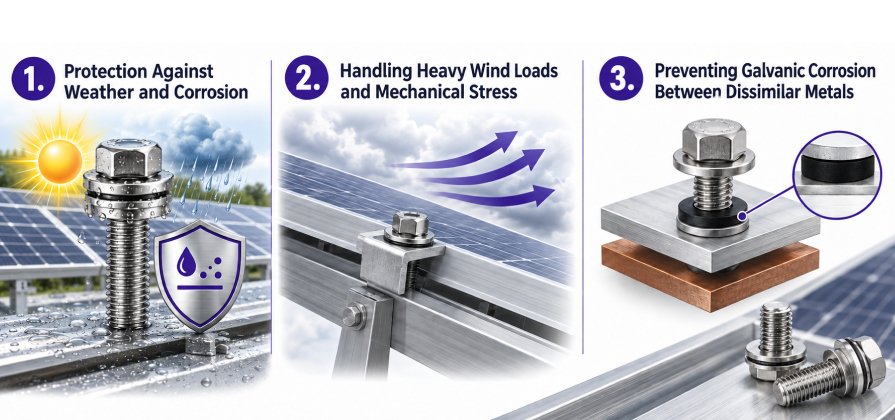
Protection Against Weather and Corrosion
Rain, humidity, dust, and temperature swings wear down ordinary metal fasteners fast. Regular carbon-steel bolts rust within a couple of years outdoors, and a rusted bolt loses its grip strength quietly.
Stainless steel fasteners resist this decay because of the chromium layer on their surface, which blocks moisture and oxygen from reaching the metal underneath. That’s why most solar EPC companies now insist on SS fasteners for outdoor structures.
Handling Heavy Wind Loads and Mechanical Stress
Solar panels act like sails in strong wind, and that force travels straight down to the fasteners holding the structure in place. A weak or undersized bolt can shear off under sudden gusts. This is why tensile and shear strength ratings matter so much when picking a stainless steel bolt for mounting frames, especially in open fields or high-wind rooftops.
Preventing Galvanic Corrosion Between Dissimilar Metals
Solar structures often combine aluminum rails, galvanized steel frames, and stainless steel hardware in one assembly. When two different metals touch in the presence of moisture, one corrodes faster than usual, a reaction called galvanic corrosion. The right fastener material, plus isolation washers where needed, prevents this damage.
What Grades of SS Fasteners Should You Use for Solar Projects?
SS304 Grade Fasteners for Standard Inland Solar Projects
SS304 is the most widely used grade for solar mounting hardware in inland areas with moderate humidity. It offers strong rust resistance, good mechanical strength, and a lower cost than higher grades. For ground-mount or rooftop projects away from the coast, a stainless steel nut bolt set in SS304 usually performs reliably.
SS316 Grade Fasteners for Coastal and High-Humidity Areas
SS 316 contains molybdenum, giving it noticeably better resistance to salt and chlorides. Solar farms near the coast should use SS316 stainless steel fasteners even though they cost more, since replacing corroded hardware later is far pricier than choosing the right grade upfront.
Source: Outokumpu – SS316 Chemical Composition (ASTM A240)
Key Types of Stainless Steel Fasteners Used in Solar Panel Mounting
Hex Bolts, Nuts, and Washers
Hex bolts remain the backbone of most solar mounting frames because they give a strong, even grip and are easy to tighten. Paired with a matching stainless steel nut and washer, they form the most common connection point between rails, brackets, and structural members.
Stainless Steel T-Bolts and Flange Bolts
T-bolts slide directly into a mounting rail’s channel, speeding up installation. Flange bolts have a built-in washer surface that spreads pressure evenly, reducing the chance of a joint working loose from vibration.
Socket Head Cap Screws and Allen CSK Screws
Socket head cap screws give a cleaner fit where space is tight, and their internal hex drive offers higher torque without rounding off the head. Allen CSK (countersunk) screws sit exactly at the level of the mounting structure material, which helps where panels or brackets need a smooth finish.
Lock Nuts and Spring Washers for Anti-Vibration Protection
Wind and thermal expansion cause constant tiny movement in a mounted structure. Lock nuts and spring washers grip threads harder under vibration, preventing the slow loosening ordinary nuts suffer over time.
Step-by-Step Selection Guide: How to Choose the Right Stainless Steel Fasteners
Step 1: Assess the Local Installation Environment
Check humidity, salt exposure, and pollution levels in the area. This single factor decides whether SS304 is enough or SS316 stainless steel fasteners are needed.
Step 2: Match Fastener Strength to Structural Load Requirements
Review the wind load calculations of the mounting system, then choose a bolt diameter and grade that comfortably meets those load values.
Step 3: Verify Compatibility with Solar Mounting Rails
Rail manufacturers use different slot widths and profiles, so always confirm that the nut bolt hardware physically fits the rail system on site.
Step 4: Ensure Correct Torque and Anti-Galling Application
Stainless steel threads can gall, or freeze, if tightened without lubrication. Applying an anti-seize compound and tightening to the specified torque value prevents thread damage and keeps the joint secure long-term.
In our own batch testing, a light anti-seize coat on SS316 threads cuts galling incidents sharply compared to dry installation, which is why we treat it as a standard step, not an optional one.
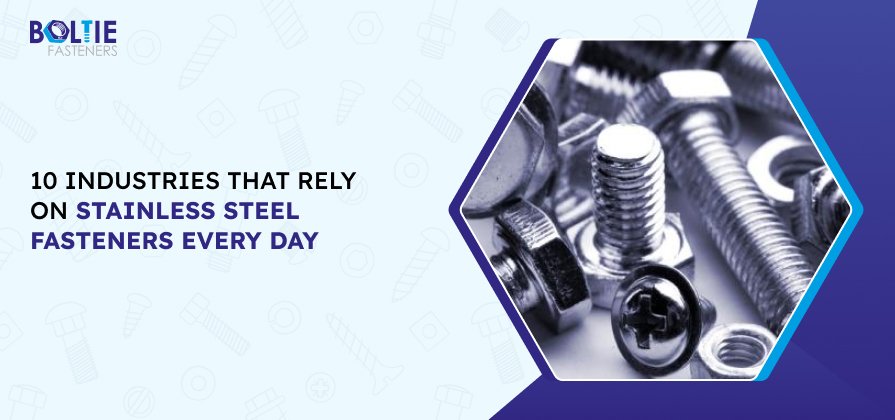
Also read on: 10 Industries That Rely on Stainless Steel Fasteners Every Day
Boltie Fasteners PVT LTD: Leading Stainless Steel Fasteners Manufacturer in India
Boltie Fasteners PVT LTD manufactures a full range of stainless steel fasteners built for solar mounting structures. As a dedicated nut & bolt manufacturer, our production covers hex bolts, T-bolts, flange bolts, lock nuts, and washers in SS304 and SS316 grades.
Leading SS Fastener Manufacturer Gujarat Supplying Global Solar Projects
Operating out of Gujarat, Boltie Fasteners PVT LTD supplies fasteners to solar EPC companies and mounting structure fabricators across India and to international projects. Our position as a nut & bolt manufacturer in this region gives us close access to raw materials and logistics, helping us keep delivery timelines short for large solar orders.
Sourcing the Best Fasteners for Solar Panel Mounting Direct from Factory
We work directly with EPC contractors and mounting structure companies to supply fasteners straight from our factory, cutting out middlemen. This means every stainless steel nut and stainless steel bolt reaching a project site comes with clear traceability back to its production batch.
Strict Quality Assurance and Material Certification
Every batch goes through material certification and mechanical testing before it leaves our facility, covering tensile strength, corrosion resistance, and dimensional accuracy. Explore our full product range and certifications at boltiefasteners.com.
Conclusion
Solar structures are a long-term investment, and the fasteners holding them together deserve as much attention as the panels and inverters. Simple choices, like picking SS304 or SS316 for your location, using the correct bolt type, and preventing galvanic corrosion between metals, make the difference between a mounting system that lasts decades and one that needs costly repairs within a few years.
Stainless steel fasteners aren’t just small hardware pieces. They’re what keeps an entire solar array standing strong through decades of sun, wind, and rain. For EPC companies and mounting structure fabricators looking for dependable, factory-certified hardware, Boltie Fasteners PVT LTD remains a trusted name built on quality and direct-from-factory reliability.
FAQs:
1. Which is better for solar mounting: SS 304 or SS 316 stainless steel fasteners?
SS 316 is preferred for coastal or high-humidity sites because of its added molybdenum content, which improves resistance to chloride and salt corrosion. SS 304 works well for standard inland installations where budget is a bigger factor.
2. Why are stainless steel fasteners recommended over regular or galvanized bolts for solar panels?
Ordinary or galvanized bolts corrode faster under constant UV, rain, and humidity exposure, risking loose panels over time. Stainless steel resists rust and maintains structural strength across decades of outdoor exposure.
3. How long do stainless steel fasteners last in solar installations?
With correct grade selection and installation, stainless steel fasteners typically last 25+ years, matching the expected service life of solar panels themselves.
4. What certifications or standards should solar fasteners meet?
Look for fasteners tested to recognized standards such as ASTM or DIN specifications, along with material test certification, to ensure consistent quality and load performance.
5. Are stainless steel fasteners suitable for coastal or high-corrosion solar sites?
Yes – SS 316 grade is specifically suited for coastal or marine-adjacent solar farms due to its superior chloride resistance compared to SS 304.